
Nearly every small business owner reaches a point where they realize more help is needed. As your business grows, deciding what roles need to be filled, when to fill them, and how to do so becomes increasingly complex. Hiring and training new employees can be costly and time-consuming, so it often makes sense to outsource certain parts of your operations.
In this article, you’ll learn the steps to outsourcing. including identifying what tasks to outsource, finding the right resources, and managing outsourced support.
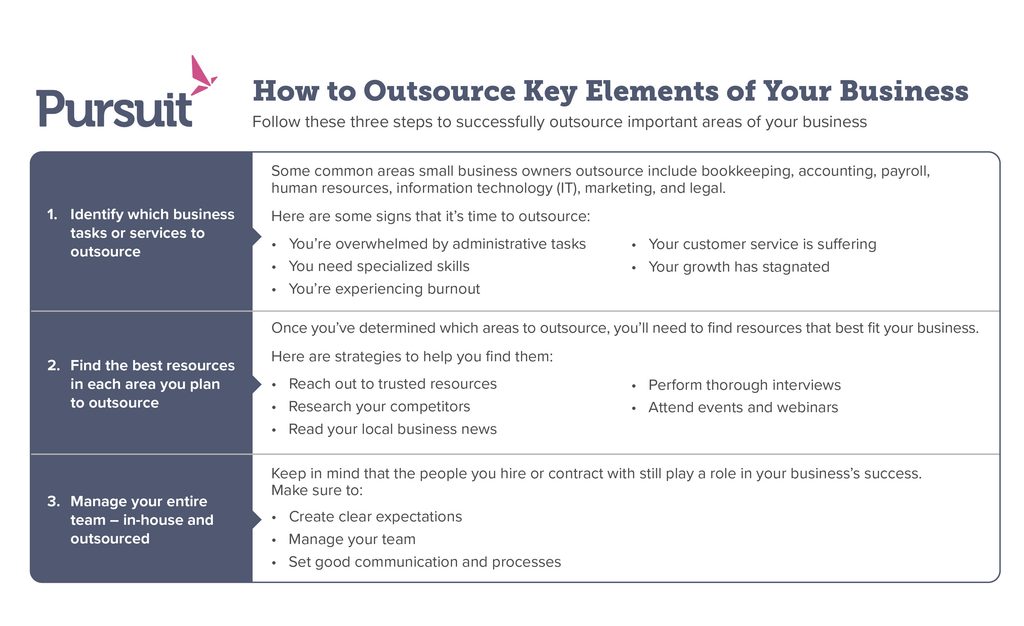
1. Identify which business tasks or services to outsource
A critical first step is to understand which parts of your business make the most sense to outsource. Here are some key signs that it’s time to outsource:
- You’re overwhelmed by administrative tasks: If routine, low-value tasks (like data entry, scheduling, or basic bookkeeping) are taking up hours of your day, you’re losing time that could be spent on strategic growth.
- You need specialized skills: Tasks like legal compliance, advanced IT security, or tax strategy often require expert knowledge that you or your current team may not possess.
- You’re experiencing burnout: If you or your team are consistently working late, feeling overwhelmed, and experiencing high stress levels, your business capacity has reached its limit.
- Your customer service is suffering: Slower response times, missed calls, or delayed order processing are clear indicators that your workload exceeds your current capacity.
- Your growth has stagnated: If you have to turn down new clients or delay launching new products because you simply don’t have the bandwidth, outsourcing can support those opportunities.
In addition, there are some areas where outsourcing is a natural fit for small businesses. While large businesses may have in-house accountants, marketing teams, and payroll and human-resources departments, very few small businesses have dedicated staff in some (or any) of these roles, especially in the early stages. These are necessary functions, though, and are great areas for outsourcing. Here are some common areas that small business owners outsource:
1. Bookkeeping
While some owners rely on bookkeeping software programs in the early stages, outsourcing bookkeeping can help free up time so that you can focus on areas that support your mission and fuel growth. A bookkeeper can help you manage the process of recording day-to-day financial inflows and outflows. It’s important that you continue to stay on top of your business finances, so establish a good relationship with your bookkeeper if you choose to outsource this role.
2. Accounting
It’s highly recommended that small business owners hire a reputable certified public accountant (CPA). A CPA’s role is both broader and more specialized than a bookkeeper’s—a CPA can help develop key financial strategies, save your business significant taxes, ensure you remain compliant with the IRS and other agencies, and much more.
3. Payroll
Many small businesses rely on software programs with payroll functionality. However, handing things off to a payroll company can help if your team is undergoing significant growth, if you have complex deductions or plans (like health benefits or retirement savings), or your business has other considerations that make payroll and its related compliance issues more complicated.
4. Human resources
As soon as you hire your first employee, a human resource liaison becomes a necessity. Consider whether you or someone on your team is adequately experienced and knowledgeable to manage the day-to-day tasks. If not, this is an excellent area to outsource.
5. Information technology (IT) services, digital design and content management
All businesses should have a website and mobile capabilities. Regardless of how often you need outside professionals for these services, it’s always good to know who you can turn to when you do. However, ensure that you maintain the ability to update your site as needed.
6. Marketing
Every business needs marketing to help it grow. While most small businesses can launch with relatively simple, in-house marketing programs, eventually you’ll need to bolster your brand, extend your reach and grow your audience.
7. Legal
For most small businesses, legal support is one of the very first operational areas to outsource. Since full-time corporate counsel is rarely necessary or budget-friendly in the early stages, outsourcing legal work allows you to access specialized protection only when you need it. Some examples include drafting contracts and agreements, business formation and structuring, protecting intellectual property, navigating complex compliance and labor laws, and during major financial events or disputes.
2. Find the best resources in each area you plan to outsource
Once you’ve determined which areas to outsource, you’ll need to find resources that best fit your business. Here are strategies to help you find them:
- Reach out to trusted resources: You can ask your colleagues, peers, and local chamber of commerce for recommendations at networking and industry events.
- Research your competitors: Especially for roles that require industry-based experience, research who’s serving your competitors and ask if they’re taking on new clients.
- Read your local business news: Look to see which companies or professionals are earning accolades.
- Be thorough: Interview potential clients thoroughly, including their full expertise and services offered, how they can fit into your business now and in the future, what the cost will be, and check references.
- Attend events and webinars: Specialized industry events and virtual summits are prime spots to meet boutique agencies and service providers tailored to your specific field.
3. Manage your entire team – in-house and outsourced
Oftentimes, when businesses outsource, they develop an “out of sight, out of mind” attitude. As a business owner, it’s always important to keep in mind that the people you hire or contract with still play a role in your business’s success.
For that reason, it’s essential to:
1. Create clear expectations for each contracted service
Clearly communicate your goals and expectations to each professional you outsource to and thoroughly review any contracts you sign.
2. Manage your team
Delegate tasks to those you outsource to and stay on top of projects and deadlines. Then, let them do their jobs.
3. Set good communication and processes with your team of professionals
Check in regularly, solicit and give feedback, and, like any other work relationship, create a positive work environment.
Pursuit can support your success
Building a strong team means that you’ve got the right people in the right places to do the right work, whether they’re within your offices or thousands of miles away. When approached wisely and managed with care, your outsourced team can be as important to your business’s success as those who are closest to you.
If you need funding to outsource or for any other business need, Pursuit can help! We have more than 15 small business loans and a line of credit and we’re here to support your success.
Start your application today!